
Airflow Dag Best Practices
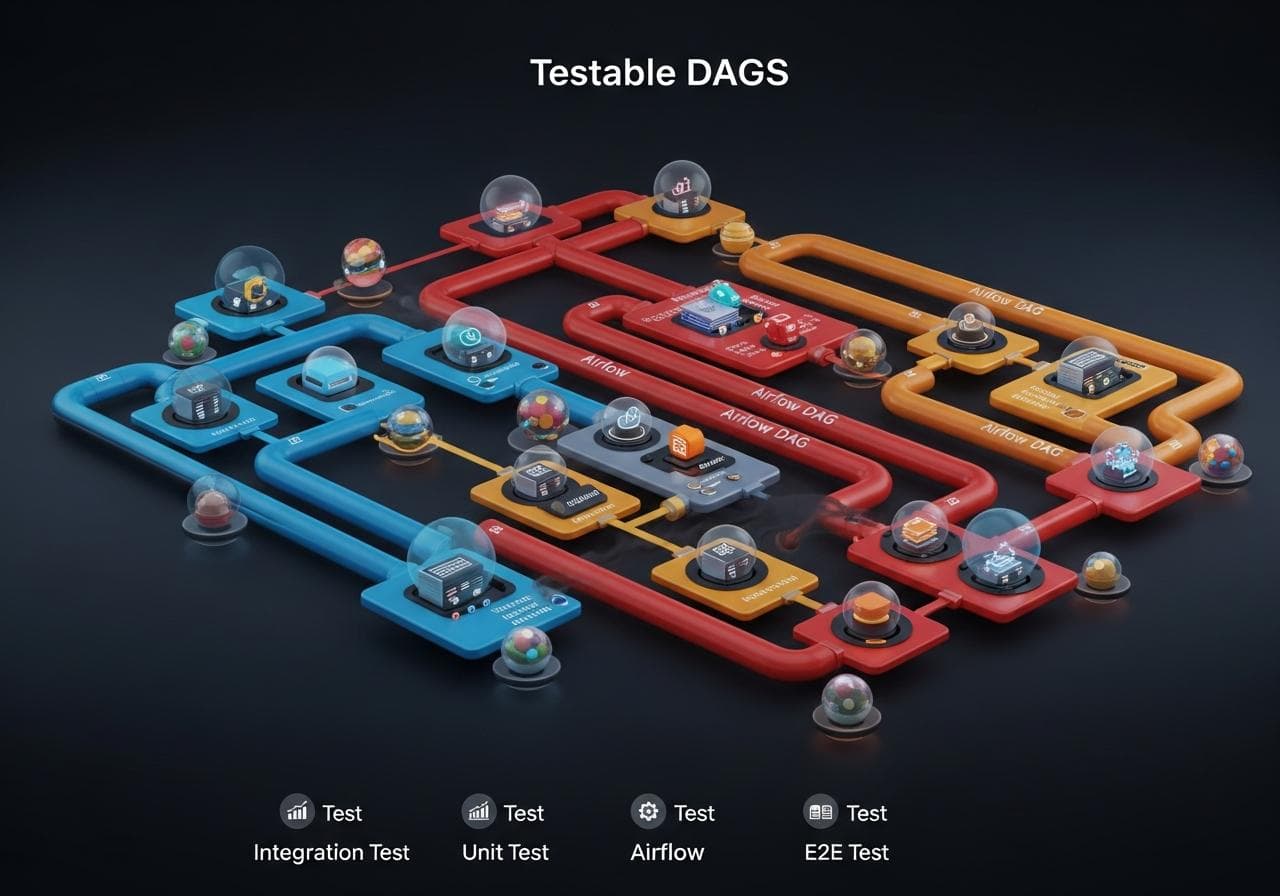
Testing DAGs with dedicated tools ensures reliability and prevents errors, improving overall workflow efficiency.
Research topics
Introduction
In the dynamic world of data engineering, Apache Airflow has emerged as the go-to tool for orchestrating workflows. Building and managing Directed Acyclic Graphs (DAGs) in Airflow demands precision and thorough testing. Whether you are developing jobs to extract, transform, or load data, practice makes perfect. This post aims to provide you with the best practices for Airflow DAG Testing, highlighting everything from Airflow Unit Tests to Airflow E2e Tests while focusing especially on Airflow Test Debugging.
Testing Strategies for Airflow DAGs
To ensure your DAGs run without a hitch, it’s essential to adopt a range of testing strategies. Testing effectively can save you from potential disasters in production. The key aspects we will cover include Airflow Test Setup, Airflow Test Execution, and the various types of tests you should consider deploying.
Airflow Unit Tests
Unit tests play a critical role in ensuring that individual components of your DAGs function correctly. These tests should be lightweight and focus on specific tasks, like validating that operators work as intended. To implement Airflow Unit Tests, you can use frameworks like pytest or unittest. The main benefit here is that you can quickly run these tests without having to deploy your entire DAG.
Airflow Integration Tests
Once your unit tests are in place, the next step is to carry out Airflow Integration Tests. These tests validate how different parts of your DAG interact with one another and with external systems (such as databases or APIs). In this stage, you can test data integrity across tasks, ensuring that data flows smoothly as intended.
Airflow E2e Tests
After unit and integration tests come Airflow E2e Tests, which simulate entire workflows. They help you validate the end-to-end functionality of your DAG, allowing you to identify bottlenecks or failure points. Make sure to pay attention to setting up the Airflow Test Environment correctly so that your E2e tests run as close to production as possible.
Airflow Test Coverage
One of the most important aspects of testing is achieving effective Airflow Test Coverage. This means ensuring that your tests effectively cover as much of your DAG's code as possible. Code coverage tools can provide insights into untested parts of your code. It's always better to have higher coverage to catch issues early during development.
Airflow Test Automation
Automating your tests can save a lot of time and effort. With tools like Jenkins or GitHub Actions, you can set up Airflow Test Automation that runs your tests for every change you make. This ensures that no new bugs are introduced as you iteratively develop your DAGs.
Airflow Test Data
Having reliable Airflow Test Data is pivotal for testing. You can create mock datasets or use a subset of your actual data to verify that your transformations and business logic work as expected. Dataset creation can be automated, allowing you to always have fresh test data on hand.
Airflow Test Debugging
Debugging is often a tedious part of coding. But with effective Airflow Test Debugging strategies, you can simplify the process. One way is to utilize logging effectively within your DAG, making it easier to track down where issues are occurring. You can also use breakpoints to step through your code if necessary.
Setting Up the Airflow Test Framework
Setting up an effective Airflow Test Framework is crucial for streamlined testing. This includes structuring your test directories, using appropriate configuration files, and establishing a consistent naming convention for tests. Good structure will save you time and headaches when managing tests.
Efficient Test Execution
With the right framework in place, you can focus on Airflow Test Execution. Execute tests frequently to keep everything running smoothly. Test execution should be fast enough to fit into a Continuous Integration (CI) pipeline without creating delays.
Creating a Dedicated Test Environment
Having a separate Airflow Test Environment will allow you to safely run tests without impacting production data. The test environment should mimic your production environment as closely as possible, enabling real-world testing conditions.
Best Practices: Summary
Testing isn’t just a box to check—it's essential for the success of your DAGs in production. Make sure to cover unit, integration, and end-to-end tests, and use automated systems to streamline the process. With a good setup in place, you can focus on building robust DAGs that handle data processing seamlessly. Whether you're dealing with airflow tests in a residential or commercial setting—such as those outlined in the resources found in this guide or more technical tests found in this resource—the principles of thorough testing remain the same.
Conclusion
In summary, mastering Airflow Test Debugging is vital for any data engineer utilizing Apache Airflow. Effective testing strategies help ensure your workflows run smoothly, provide reliable outputs, and maintain system stability. By following the best practices outlined, you increase your chances of success. To further your learning, consider diving into detailed instructions available in this document. Happy testing!
Posts Relacionados
3 Roofing Companies That Will Make Your Roof Look New Again
Transform your old roof with expert roofing services. Choose from top-rated companies for a stunning new look.

4 Season Sunroom Budget Costs
Building a sunroom involves significant costs, varying based on size, materials, and features.

5 Roofing Companies That Will Make Your Roof Look New Again
Discover the top roofing companies that specialize in transforming old roofs into stunning new ones.