
Best Roof Ventilation Practices
Proper roof ventilation, adhering to building codes, ensures longevity, prevents moisture damage, and maintains energy efficiency.
Research topics
When it comes to energy efficiency in your home, one key area often overlooked is roof ventilation. Proper ventilation can make a significant difference in maintaining comfortable indoor temperatures and reducing energy bills. In this post, we’ll dive into the best practices for roof ventilation to help you maximize your home's energy efficiency.
Understanding Roof Ventilation
Roof ventilation is the process of allowing air to flow in and out of the attic space, which is vital for regulating temperature and moisture levels. When a roof is properly ventilated, it helps prevent problems like mold growth and ice dams during the winter. Furthermore, it can improve the lifespan of your roofing materials, whether you have asphalt shingles or other types.
Importance of Attic Ventilation
Did you know that up to 30% of cooling and heating loss can be attributed to inadequate attic ventilation? Without the right amount of airflow, heat can build up in your attic during the summer, causing your air conditioning unit to work overtime. This not only increases your energy costs but can also contribute to premature wear on your roofing materials. That’s why understanding ventilation requirements is essential to achieving optimal energy efficiency.
Types of Vents: Soffit, Ridge, and Exhaust
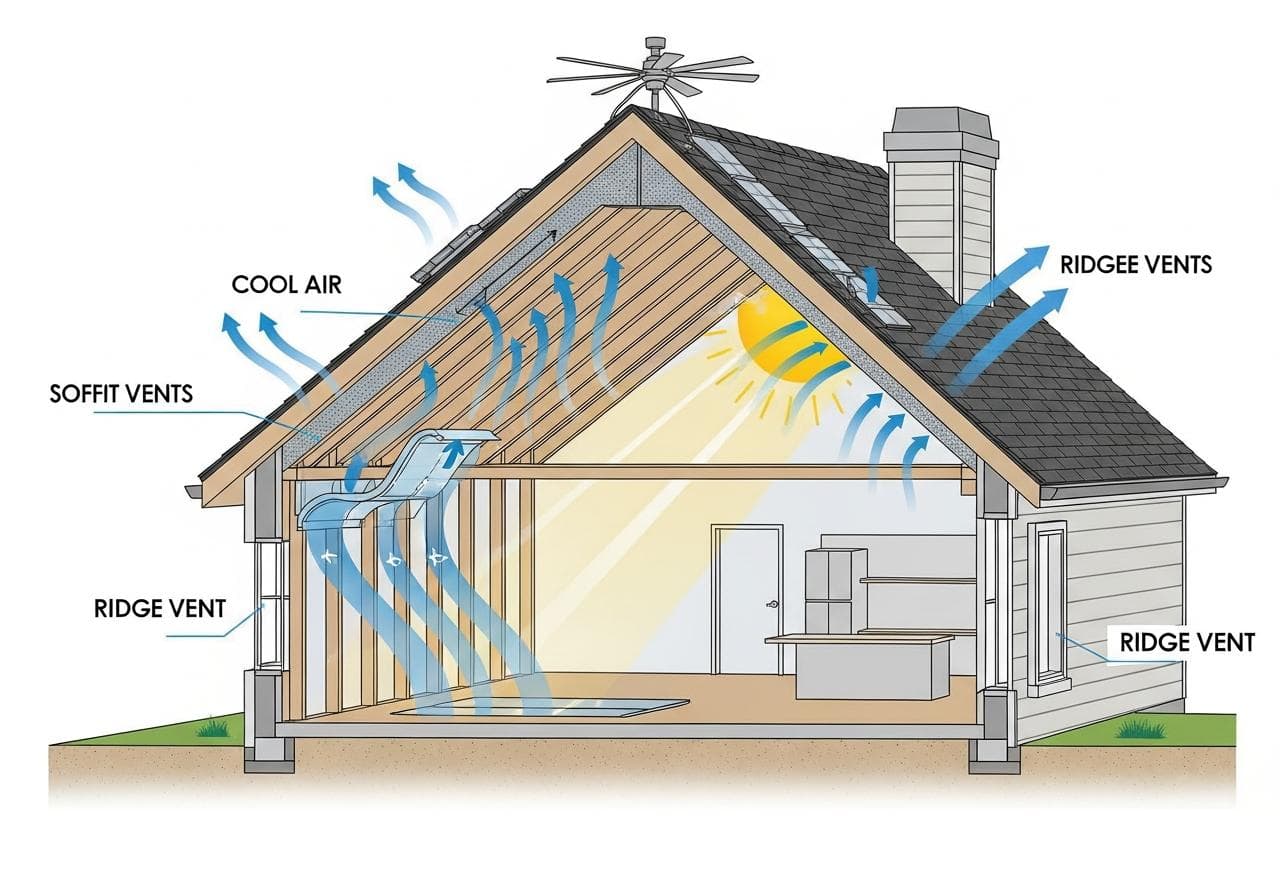
There are three primary types of vents used in roof ventilation systems: soffit vents, ridge vents, and exhaust vents. Each serves a unique purpose and is essential for creating a balanced airflow in your attic.
Soffit vents are located under the eaves of your roof, allowing cool air to enter the attic. They play a crucial role in maintaining the airflow needed for effective ventilation. Ideally, you should have a soffit vent for every 150 square feet of attic space for adequate intake ventilation.
Installed at the peak of your roof, ridge vents facilitate the exit of hot, stale air from the attic. They work best when paired with soffit vents to create a continuous flow of air, helping to keep your attic cooler. A properly installed ridge vent can be a game changer for your home's overall ventilation system.
Exhaust vents can also help enhance airflow in your attic. They can be powered or passive, and they're designed to push out hot air while drawing in cool air from the outside. Combining exhaust vents with other ventilation types can create a highly efficient system for maintaining indoor comfort.
Efficient Whole House Fans
A whole house fan can be an excellent addition to your home's ventilation strategy. This type of fan typically sits in the attic and circulates the air throughout your living space. They are especially effective in the evening and early morning when outside temperatures drop. However, using a whole house fan effectively requires understanding the balance between intake and exhaust from your soffit and ridge vents.
Roof Ventilation Codes and Building Codes
Before diving into any roof ventilation project, it’s vital to familiarize yourself with roof ventilation codes and local building codes. Many municipalities have specific guidelines on ventilation requirements, which must be observed to ensure a habitable space and protect your investment. You can check Washington's roof ventilation codes here.
Choosing the Right Ventilation Strategy
Creating a unique ventilation strategy for your home involves considering its size, the local climate, and your energy efficiency goals. While it might seem overwhelming, enlisting a professional to conduct a ventilation analysis can help you make informed decisions. Whether you need to add more vents or consider different types of insulation, professional guidance can steer you in the right direction.
Ventilation and Energy Efficiency
Proper roof ventilation is essential for energy efficiency. Poor ventilation leads to excessive heat buildup, causing HVAC systems to work harder than necessary. This can translate into higher energy bills and lower energy efficiency. When comparing roofing systems and insulation types, remember that materials work optimally when ventilation is adequately addressed.
Impact of Weather on Ventilation Needs
Your roof ventilation needs can fluctuate based on the seasons. In hotter climates, increased ventilation helps maintain cooler indoor temperatures, whereas, in cooler environments, it combats moisture and prevents ice dam formation. Adapting your ventilation strategy seasonally can further improve your energy efficiency and comfort.
Maintaining Your Ventilation Systems
Just like any other part of your home, attic ventilation systems require regular inspections and maintenance. Over time, vents can become clogged with debris or damaged by weather elements. Regularly check your vents to ensure they are functioning correctly and free from blockages.
The Role of Building Materials in Ventilation
The type of roofing materials you choose can also affect your roof ventilation system. For example, reflective roofing materials can enhance ventilation effectiveness by reducing heat absorption. If you’re in the market for new roofing, considering the material's efficiency along with your ventilation plans is crucial.
Local Resources for Ventilation Codes
For those looking for additional information on roof ventilation codes and standards, resources are available online. Websites like Ohagin Codes Resource offer valuable tools for understanding local regulations. Make sure you’re staying compliant with local building standards to ensure safety and efficiency.
Conclusion
In summary, adopting the best roof ventilation practices is critical for enhancing energy efficiency in your home. From installing the right types of vents to adhering to local building codes, taking these steps ensures better indoor air quality, comfort, and reduced energy costs. Whether you opt for traditional ventilation methods or turn to modern solutions like whole house fans, remember that a well-ventilated home is a happy home!
For further reading on the importance of ventilation codes in roofing, check out this insightful article from GAF: The Role of Roofing Codes and Standards.
Posts Relacionados
3 Roofing Companies That Will Make Your Roof Look New Again
Transform your old roof with expert roofing services. Choose from top-rated companies for a stunning new look.
4 Season Sunroom Budget Costs
Building a sunroom involves significant costs, varying based on size, materials, and features.

5 Roofing Companies That Will Make Your Roof Look New Again
Discover the top roofing companies that specialize in transforming old roofs into stunning new ones.